


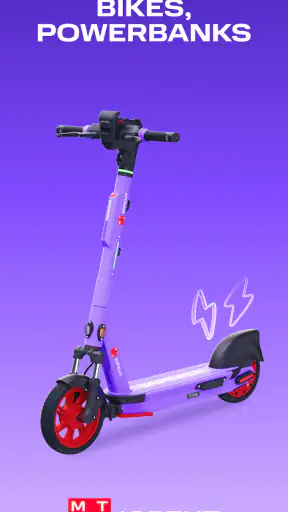
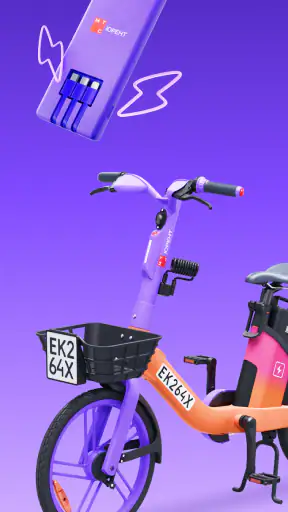
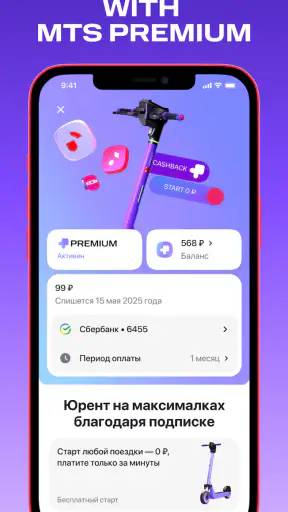
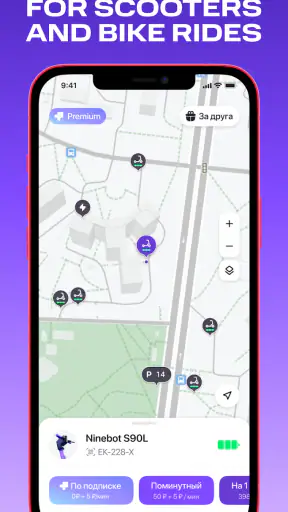
I tried Urent as a practical way to handle short urban trips, and my first impression was that it makes the most sense when I treat it as a transport tool rather than a leisure app. It belongs to the Auto & Vehicles category and is built around shared e-scooters and e-bikes. That focus is immediately clear: the app is there to help me find and use a nearby vehicle, not to replace a full journey planner or a conventional car-rental service.
The service is developed by Urent and is free to install. That distinction matters. I can download and open the app without paying for the software itself, but using a shared vehicle is a separate question governed by the service’s current rental terms and local availability. I would not confuse free access to the app with unlimited free rides. For someone deciding whether it is worth trying, the sensible approach is to install it first, inspect the vehicles and ride conditions available in the relevant area, and then decide whether the service fits a regular route.
How Urent fits into an everyday journey
The strongest use case is the awkward middle distance: too far to walk comfortably, too short to justify calling a car, and inconvenient to cover with public transport alone. I can imagine opening Urent after leaving a train or bus, checking whether an e-scooter or e-bike is nearby, and using it for the final part of the trip. That is a more convincing scenario than treating it as a complete replacement for every form of transport.
It can also be useful when a normal commute has one unreliable section. If a bus connection leaves me waiting longer than expected, a nearby shared vehicle may offer a quicker alternative. The benefit is not just speed; it is flexibility. I can make a short point-to-point trip without owning, storing, charging or maintaining a personal scooter or bike.
That convenience depends heavily on the local network. A sharing app is only as useful as the vehicles I can actually reach when I need them. A polished interface cannot compensate for an empty area, a vehicle that is too far away, or a destination where ending the ride is inconvenient. I would therefore judge Urent by my usual routes rather than by the app alone.
What the free download really gives me
Urent has no purchase price for installation, which lowers the barrier to testing it. I can explore the service before committing to ownership or a long-term transport habit. This is especially useful for occasional riders who only need a vehicle during a visit, a disrupted commute, or a short errand.
The free entry point also makes comparison easier. I can keep Urent alongside public transport, walking and taxi options, then choose based on the particular trip. That is a better value proposition than buying a personal e-scooter for a need that appears only now and then. The app turns access into the main product: I pay attention to the ride itself, not to equipment sitting unused at home.
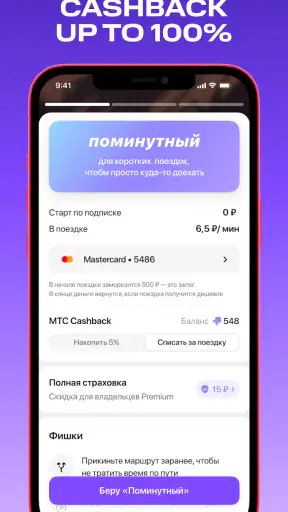
At the same time, the installation price tells me very little about the final cost of a journey. Ride charges, local conditions and any applicable service rules are the details that determine whether a trip is economical. I would check those details before starting, especially for a route that might take longer than expected. The right comparison is not “free app versus paid alternative”; it is the complete cost and effort of an Urent ride versus walking, transit, a taxi or using my own vehicle.
A practical workflow for first-time riders
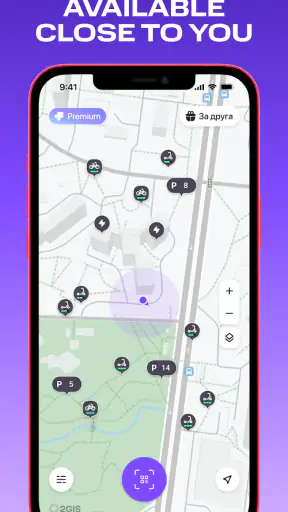
My preferred workflow would be to check the map before leaving my current location, not after I have already committed to the route. I would look for a vehicle close enough to reach on foot, consider where I need to finish, and avoid assuming that the nearest marker automatically makes it the best choice. A slightly farther vehicle may be more useful if it places me on a better route or closer to the area where I actually need to go.
I would also leave a little time for the start of the trip. Shared vehicles are not the same as walking out to a privately owned bike. I may need to locate the vehicle, confirm that it is the one shown in the app, and make sure the opening process works before riding. That small buffer prevents a short journey from becoming stressful.
A less obvious advantage of this approach is that it helps me decide whether the vehicle is appropriate before I begin. If the route includes a difficult final stretch, heavy luggage or a destination where parking and ending the ride may be awkward, a bus or taxi could be the more practical choice. Urent is most valuable when I think through the whole trip, not just the first few hundred metres.
Where the app is more useful than ownership
Owning an e-scooter or e-bike gives me predictable access, but it also brings storage, charging, maintenance and security responsibilities. Urent removes those ownership tasks from occasional travel. That trade-off is particularly attractive for people in small homes, visitors who do not want to transport equipment, and commuters whose need changes from day to day.
Shared access can also be a sensible trial before buying personal equipment. I can learn whether two-wheeled travel suits my routine, whether I am comfortable with the local roads and whether short rides genuinely save time. This is a better experiment than purchasing first and discovering later that weather, route design or storage makes the habit impractical.
The compromise is control. With my own bike or scooter, I know its condition, battery status and location. With Urent, I depend on what is available in the network. That makes the app a strong supplement to transport, but a weaker choice as my only guaranteed way to get somewhere important.
Small decisions that improve the experience
I would avoid planning a tight appointment around a shared vehicle unless I have a backup. Even when a vehicle appears nearby, the practical start of the ride can take longer than expected. For a relaxed errand, that uncertainty is minor. For a flight, examination or work meeting, it is a meaningful risk.
I would also treat the destination as carefully as the starting point. A vehicle may solve the first part of a journey while creating a problem at the other end if I cannot conveniently finish the rental there. Checking the destination area in advance is one of the most useful habits I can develop with this type of service.
Finally, I would use the app as a decision aid rather than automatically choosing the first available option. If the vehicle is far away, the route is unsuitable, or the trip is short enough to walk, the best value may be to leave the app closed. The smartest Urent ride is the one that solves a transport problem without creating a new one.
What may cause friction
The main limitation is availability. A sharing service can be excellent at one time of day and disappointing at another. If I need a vehicle at a specific moment, I cannot assume that the same level of access will be present every day. This is the central difference from owning a bike or scooter.
There is also a learning curve around local riding conditions. The app can help me access a vehicle, but it does not turn every street into a comfortable route. Traffic, road surfaces, weather and unfamiliar areas still affect the experience. Someone who dislikes riding in busy urban environments may find that a conventional taxi or public transport is less demanding.
Another trade-off is that short trips can feel less simple when I include walking to the vehicle, preparing to ride and dealing with the end of the rental. For a very short distance, walking may remain faster and cheaper in practical terms. I would use Urent when the vehicle meaningfully improves the journey, not merely because one happens to be visible nearby.
The app is also not the ideal answer for every passenger. If I am carrying bulky shopping, travelling with someone who cannot ride, or need a predictable enclosed vehicle, a car service or public transport is more suitable. The e-scooter and e-bike format naturally favors light, individual travel.
Who is likely to get the most value
Urent is a good fit for urban residents who regularly make short solo trips and already feel comfortable using two-wheeled transport. It is also useful for commuters who need a flexible connection between a station and a workplace, or for visitors who want more independence than walking provides without renting a full car.
Occasional users may appreciate the free installation because they can keep the option available without buying equipment. The app is also worth considering for anyone testing whether shared mobility can replace some taxi journeys. In that situation, I would compare the complete trip cost and reliability over several ordinary journeys rather than judging it from one unusually convenient ride.
People who should skip it include those who require guaranteed availability, those travelling with heavy luggage, and anyone who cannot comfortably or safely use an e-scooter or e-bike. It is also a poor primary option for long-distance travel. A train, bus, personal vehicle or traditional rental service will usually make more sense when the trip is lengthy or requires a fixed schedule.
How it compares with the usual alternatives
Compared with walking, Urent wins when the distance is tiring or time matters, but loses when finding and returning a vehicle takes longer than the walk. Compared with public transport, it offers more direct movement and fewer transfers, while public transport is generally better for bad weather, passengers and longer routes.
Compared with taxis, shared two-wheeled vehicles can give me more independence and avoid waiting for a driver, but taxis provide shelter, luggage capacity and a more predictable experience. Compared with owning a scooter or bike, Urent reduces responsibility and upfront commitment, yet sacrifices guaranteed access and personal familiarity.
That makes the app complementary rather than universal. I would not replace every transport option with it. I would keep it available for the journeys where direct, lightweight movement matters, then switch to another method when comfort, certainty or carrying capacity becomes more important.
Platform details and overall confidence
Urent has been available since late August of 2018, and the current Android release is version 2.3.2. It supports Android 7.0 and later, which makes it accessible on many older devices as well as newer phones. The content rating is Everyone, so the app is positioned for a broad audience rather than a narrowly restricted age group.
Its scale also suggests that it is not an obscure experiment: the app has passed ten million installs and holds an average rating of 4.5 from roughly two hundred and fifty thousand ratings. Those figures do not guarantee that my local experience will be perfect, but they do give me more confidence that the service has been used widely enough to be worth evaluating for my area.
I would still separate popularity from suitability. A large user base cannot tell me whether a vehicle will be available near my home, whether my usual destination works well, or whether the ride economics suit my budget. Those are local, personal questions that I can answer only by checking the app and trying a few realistic journeys.
My verdict on the value
For me, Urent earns its place as a flexible backup and a practical short-trip option. The free app makes experimentation easy, while shared e-scooters and e-bikes can remove the ownership burden that stops many people from using two-wheeled transport. The strongest value appears when I need a direct trip across town, have light belongings and can tolerate some uncertainty about availability.
I would not recommend relying on it blindly for time-critical travel, heavy loads or routes that demand guaranteed access. I would also check the complete ride conditions before assuming that a free download means a low-cost journey. That is not a criticism unique to Urent; it is simply the important difference between accessing a sharing platform and owning the vehicle myself.
Overall, I would recommend installing Urent if you live, work or regularly travel in an area it serves and want another option between walking and a car. I would skip it if your trips need shelter, capacity or strict reliability. For the right user, Urent is valuable because it makes occasional access easier than ownership; for everyone else, it is best treated as an optional transport tool rather than a complete mobility solution.


